CAS: 26839-75-8; (S)-Timolol (Anhydrous)
该化合物是一种乙型抗体受体对抗物,具体而言,Timolol的(S)-抗生素抗生素,以其与种族混合物相比具有优越的药理活动闻名,在阻塞β1和β2受体方面表现出高度的选择性和效力,使其在心血管和眼科应用中具有价值,特别是在治疗高血压和青光眼方面.(S)-抗生素由于与目标受体的立体互动而显示出更高的功效和减少的副作用.其化学纯度和明确界定的立体化学学确保了配方的一贯性能.(S)-Timolol由于具有可靠的药理基因特征和既定的安全数据,在研发工作中被广泛使用.(S)-Timolol被广泛使用.
- ⚠️《2026年兴奋剂目录》
- 英文名称(S)-Timolol (Anhydrous)
- 中文名称噻吗洛尔
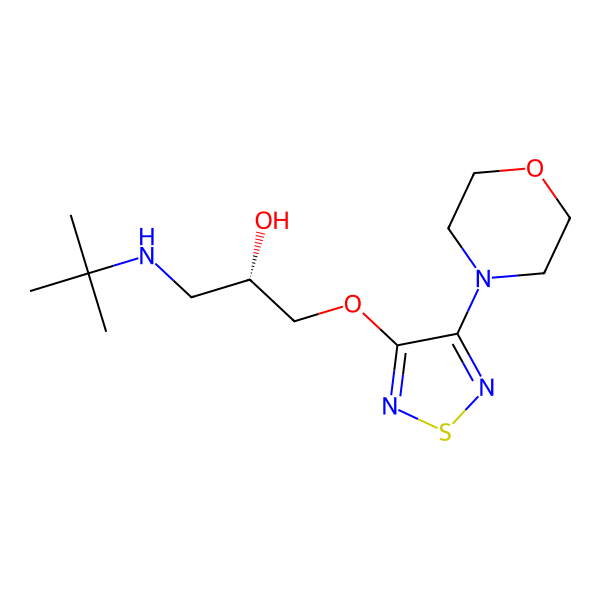
- IUPAC名称(2S)-1-(tert-butylamino)-3-[(4-morpholin-4-yl-1,2,5-thiadiazol-3-yl)oxy]propan-2-ol
- 其它别名(S)-1-(tert-Butylamino)-3-[(4-morpholino-1,2,5-thiadiazol-3-yl)oxy]propan-2-ol
- CAS编号26839-75-8
- MFCD编号:MFCD00864565
- EINECS号:248-032-6
- FDA UNII编号:5JKY92S7BR
- 分子式:C13H24N4O3S
- 分子量:316.42
- 产品CID: 1247746
- 产品分类原料药 → 循环系统用药 → 抗心律失常药

物理性质
MSDS等安全信息
- GHS象形图


- GHS符号GHS08 & GHS07;
注释: Health hazard & Exclamation mark - 危险类别生殖毒性 类别2
急性毒性 类别4(经口) - 警示词Warning(警告)
- 危险描述H361 |怀疑对生育能力或胎儿造成损害.
H302 |吞咽有害. - 防范说明P264-P270-P301+P312-P330-P501-P201-P202-P281-P308+P313-P405-P501
- 安全声明IDENTIFICATION: Timolol is an adrenergic beta-receptor blocking agent and a Class II antiarrhythmic drug. The drug is a white, odorless powder. Soluble in water, alcohol, in chloroform; soluble in methanol; practically insoluble in ether. HUMAN EXPOSURE: Main risks and target organs: Beta-blocking agents exert their effects by competing with endogenous and/or exogenous beta-adrenergic agonists. Timolol is a non-cardioselective beta-blocker (it has similar affinity for beta1 and beta2 receptors) and it has no intrinsic sympathomimetic or membrane stabilizing effect. The main risks might be an impairment of atrioventricular conduction and a negative inotropic effect. Summary of clinical effects: Only one case of acute poisoning after ingestion in a 24 year old man has been reported. The patient showed moderate toxic symptoms: drowsiness, vertigo, headache, and first degree atrioventricular block which was treated with atropine and isoproterenol. The patient recovered without sequelae. Adverse systemic effects have been reported in patients treated with timolol eye drops. Indications: Oral administration: Timolol has been used in the treatment of hypertension, angina pectoris, cardiac arrhythmias, migraine and for the reduction of mortality following myocardial infarction. Ocular administration: Ophthalmic solutions of timolol are used in the treatment of glaucoma to reduce intraocular pressure. Contraindications: Timolol is contraindicated in patients with asthma, second and third degree AV block, and cardiogenic shock. Timolol should be used cautiously in patients with chronic obstructive pulmonary diseases, sinus bradycardia, cardiac failure, myasthenia gravis, Raynaud's syndrome. Timolol should not be administered with other beta-blockers. Routes of entry: Oral: Poisoning after ingestion of timolol tablets may occur but only one case has been actually reported. Eye: Systemic toxic symptoms may occur after treatment with timolol eye drops. Absorption by route of exposure: Oral: Timolol is almost completely (90%) absorbed from the gastrointestinal tract. The peak plasma concentration occurs 0.5-3 hours after ingestion. Timolol is subject to a moderate first pass effect. Ocular: The onset of the ocular hypotensive action occurs after 10-20 minutes and lasts for at least 24 hours. Timolol is absorbed systemically. Distribution by route of exposure: Oral: Bioavailability is about 60%. Apparent volume of distribution is 1.3 - 1.7 L/kg. Plasma protein binding is approximately 10%. Timolol crosses the placenta Ocular: Timolol is distributed in conjunctiva, cornea, sclera, iris, aqueous humor, liver, kidney and lung. Transdermal: After cutaneous application of timolol ointment, 50 to 60% is absorbed systemically. Biological half-life by route of exposure: Oral: After oral administration, the half-life is 2.5 - 5 hours. The half-life varies according to genetic differences in hepatic metabolism: half-lives of 3.7 and 7.5 hours were reported in extensive and poor metabolizers, respectively. Metabolism: Oral: Timolol is extensively metabolized in the liver by hydrolytic cleavage of the morpholino ring with subsequent oxidation. Following an oral dose, 80% is metabolized and 20% is eliminated unchanged in urine. Metabolism is dependent on genetic polymorphism. Elimination by route of exposure: Oral: Kidney: About 20% of the dose is eliminated unchanged in the urine and 40 to 60% as metabolites. Breast milk: Timolol is present in breast milk. Following a maternal oral dose, the milk/plasma ratio is 0.80. Ocular: Breast milk: Following ocular instilation, the concentration in breast milk was approximately 6 times higher than in serum. Pharmacology and toxicology: Mode of action: Toxicodynamics: At toxic doses, timolol may exert a pronounced negative chronotropic and negative inotropic cardiac effect. Pharmacodynamics: The exact mechanism whereby timolol reduces ocular pressure is still not known. The most likely action is by decreasing the secretion of aqueous humor. At therapeutic doses, timolol slightly decreases heart rate, supraventricular conduction and cardiac output. Adults: Only one case of acute poisoning with timolol has been reported; this patient showed moderately severe symptoms. Children: An 18 month old girl developed bradycardia, respiratory depression and cyanosis 30 minutes after the administration of timolol eye drops. Teratogenicity: No epidemiological studies of congenital abnormalities among infants born to women treated with timolol during pregnancy have been reported. Interactions: Sinus bradycardia has been reported after concomitant treatment with timolol eye drops and quinidine. Clinical effects: Acute poisoning: Eye contact: Adverse systemic effects have been reported after treatment with ophthalmic solutions of timolol. Chronic poisoning: Eye contact: Dryness of the eye has been reported in a man treated with timolol 75 mg daily. Corneal anesthesia was observed in a patient treated with timolol eye drops. Systematic description of clinical effects: Cardiovascular: Acute: First-degree atrioventricular block has been reported after ingestion of blood pressure was 120/80 mmHg and the heart rate was 58/min. Bradycardia, hypotension, atrioventricular block and congestive cardiac failure may occur after administration of timolol. Respiratory: Acute: Reversible respiratory arrest was observed in a 62-year-old woman after instillation of timolol eye drops and may occur after oral administration. Bronchospasm may occur in susceptible patients after administration of timolol. Neurological: CNS: Acute: Drowsiness, vertigo, headache have been reported in one case. Fatigue, confusion, depression, hallucinations have been reported after administration of timolol. Peripheral nervous system: Acute: Worsening of myasthenia gravis may occur after administration of timolol. Autonomic nervous system: Acute: Effects of beta-blockade. Gastrointestinal: Acute: abdominal pain, nausea, vomiting and diarrhea may occur after administration of timolol orally or as eye drops. Dermatological: Acute: Urticaria may be observed. Eye, ear, nose, throat: local effects: Acute: Eyelid erythema and edema has been reported following ocular administration. Metabolic: Acid-base disturbances. Fluid and electrolyte disturbances: Hyperkalemia has been reported. Other clinical effects: Sexual dysfunction following usual doses of topical ocular timolol has been reported and may also occur after oral administration. Special risks: Timolol is eliminated in breast milk. No epidemiological studies of congenital anomalies among infants born to women treated with timolol during pregnancy have been reported. | Signs and Symptoms of Overdose | Overdose of β-blockers can cause catecholamine levels to decrease sharply. This effect can lead to various symptoms, including hypotension, bradycardia, hypoglycemia, decreased myocardial contractility and oxygen consumption, and fatigue. Clinicians should closely monitor patients taking anticholinergics or cardiotoxic medicines, as these may potentiate timolol’s toxic effects. | Management of Overdose | The first step in managing β-blocker overdose is to secure the airway and administer cardiac life support if needed. Oxygen and bronchodilators can be used to treat patients with bronchospasm. Atropine should be given to patients experiencing bradycardia or requiring rapid intubation. Sodium bicarbonate and magnesium sulfate may also prove useful in managing the patient’s cardiac symptoms. IV fluids, including dextrose, glucagon, and calcium salts, can be used to treat the patient’s metabolic symptoms. High-dose insulin is used for managing shock caused by β-blocker overdose. Benzodiazepines can be a first-line treatment for any seizures the patient may experience. Gastrointestinal decontamination or administration of activated charcoal can help reduce the absorption of the β-blocker in the gut.
欧盟法规
REACH注册ECHA物质C&L通报REACH预注册上下游产品
CAS号56526-15-9 (S)-5-((4-morph... | CAS号30165-97-0 4-吗啉-4-基-1,2,5-... | CAS号30165-96-9 3-氯-4-吗啉基-1,2,5-噻二唑 | CAS号194861-99-9 [(5S)-3-tert-bu... | CAS号75-64-9 叔丁胺 | CAS号58827-68-2 rac4-[4-(环氧乙烷基甲... | CAS号30315-46-9 S-(-)-3-叔丁胺基-1,2-丙二醇 | CAS号69500-53-4 (S)-4-[4-(Oxira... | CAS号29023-48-1 外消旋噻吗洛尔-d5 马来酸盐 | CAS号26921-17-5 马来酸噻吗洛尔合成工艺路线路线简述
(S)-5-((4-Morpholino-1,2,5-Thiadiazol-3-Yloxy)-Methyl)-3-Tert-Butyloxazolidin-2-One置于sodium Hydroxide体系中,用 甲醇 用作溶剂,化学反应 8.0H,以90%的收率获得噻吗洛尔
参考文献:Enantioselective Synthesis Of (S)-Timolol Via Kinetic Resolution Of Terminal Epoxides And Dihydroxylation Of Allylamines
标题:Enantioselective Synthesis Of (S)-Timolol Via Kinetic Resolution Of Terminal Epoxides And Dihydroxylation Of Allylamines
摘要:An Efficient Enantioselective Synthesis Of (S)-Timolol Has Been Described Using Chiral Co-Salen-Catalyzed Kinetic Resolution Of Less Expensive (+/-)-Epichlorohydrin With 3-Hydroxy-4-(N-Morpholino)-1,2,5-Thiadiazole In Good Overall Yield (55%) And Excellent Enantioselectivity (98%). Synthesis Of (S)-Timolol Has Also Been Achieved Using Hydrolytic Kinetic Resolution As Well As Asymmetric Dihydroxylation Routes In 90% Ee And 56% Ee,Respectively. (C) 2007 Elsevier Ltd. All Rights Reserved.
Doi:10.1016/j.Tet.2007.01.057
海关参考信息
- 2905122000-异丙醇
2905310000-1,2-乙二醇
2905320000-1,2-丙二醇
2909110000-乙醚 - 💡 提示:海关信息按照顺序优先匹配,如需确认的海关信息,请参考相关资料。
- 详情请参考:📖 海关编码查询和海关进出口税则
专利信息
专利号:US-9353057-B2
优先权日:2003-12-30
标 题:Synthesis of acyloxyalkyl carbamate prodrugs and intermediates thereof
发明人:GALLOP MARK A; DAI XUEDONG; SCHEUERMAN RANDALL A; RAILLARD STEPHEN P; MANTHATI SURESH K; YAO FENMEI; PHAN THU; LUDWIKOW MARIA; PENG GE; BHAT SEEMA
权利人:XENOPORT INC
摘要:Methods for synthesis of 1-(acyloxy)-alkyl carbamates, particularly, the synthesis of 1-(acyloxy)-alkyl carbamate prodrugs of primary or secondary amine-containing drugs are described. Also described are methods for synthesis of 1-(acyloxy)-alkyl N-hydroxysuccinimidyl carbonates which are useful intermediates in the synthesis of 1-(acyloxy)-alkyl carbamates are also described.
专利号:US-10925977-B2
优先权日:2006-10-05
标 题 :Efficient synthesis of chelators for nuclear imaging and radiotherapy: compositions and applications
发明人:YANG DAVID J; YU DONGFANG; THOMPSON ANDREW S
权利人:YANG DAVID J; YU DONGFANG; THOMPSON ANDREW S; CEIL POINT LLC; UNIV TEXAS
摘要:Novel methods of synthesis of chelator-targeting ligand conjugates, compositions comprising such conjugates, and therapeutic and diagnostic applications of such conjugates are disclosed. The compositions include chelator-targeting ligand conjugates optionally chelated to one or more metal ions. Methods of synthesizing these compositions in high purity are also presented. Also disclosed are methods of imaging, treating and diagnosing disease in a subject using these novel compositions, such as methods of imaging a tumor within a subject and methods of diagnosing myocardial ischemia.
专利号:US-10973847-B2
优先权日:2017-06-30
标题 :Core-to-surface polymerization for the synthesis of star polymers and uses thereof
发明人:JOHNSON JEREMIAH A; GOLDER MATTHEW R
权利人:MASSACHUSETTS INST TECHNOLOGY
摘要:Disclosed are methods, compositions, reagents, systems, and kits to prepare star polymers, as well as compositions and uses thereof. Various embodiments show that synthesis of these polymers contain low metal concentration to provide polymers for diverse biomedical applications including in vivo applications.
专利号:US-2003050305-A1
优先权日:2000-05-22
标题:Thromboxane inhibitors, compositions and methods of use
发明人:TEJADA INIGO SAENZ DE
摘要:The present invention describes methods for treating or preventing sexual dysfunctions in males and females, and for enhancing sexual responses in males and females by administering a therapeutically effective amount of at least one thromboxane inhibitor, and, optionally, at least one compound that donates, transfers or releases nitric oxide, elevates endogenous levels of endothelium-derived relaxing factor, stimulates endogenous synthesis of nitric oxide or is a substrate for nitric oxide synthase, and/or at least one vasoactive agent. The male or female may preferably be diabetic. The present invention also provides novel compositions comprising at least one thromboxane inhibitor, and, at least one compound that donates, transfers or releases nitric oxide, elevates endogenous levels of endothelium-derived relaxing factor, stimulates endogenous synthesis of nitric oxide or is a substrate for nitric oxide synthase, and, optionally, at least one therapeutic agent, such as, vasoactive agents, nonsteroidal antiinflanmmatory compounds (NSAIDs), selective cyclooxygenase-2 (COX-2) inhibitors, anticoagulants, angiotensin converting enzymes (ACE) inhibitors, angiotensin II receptor antagonists, renin inhibitors, and mixtures thereof. The present invention also provides methods for treating or preventing ischemic heart disorders, myocardial infarction, angina pectoris, stroke, migraine, cerebral hemorrhage, cardiac fatalities, transient ischaemic attacks, complications following organ transplants, coronary artery bypasses, angioplasty, endarterectomy, atherosclerosis, pulmonary embolism, bronchial asthma, bronchitis, pneumonia, circulatory shock of various organs, nephritis, graft rejection, cancerous metastases, pregnancy-induced hypertension, preeclampsia, eclampsia, thrombotic and thromboembolic disorders, intrauterine growth, gastrointestinal disorders, renal diseases and disorders, disorders resulting from elevated uric acid levels and dysmenorrhea, and for inhibiting platelet aggregation or platelet adhesion or relaxing smooth muscles.
专利号:US-6469065-B1
优先权日:1996-02-02
标 题:Nitrosated and nitrosylated α-adrenergic receptor antagonist, compositions and methods of use
发明人:GARVEY DAVID S; SCHROEDER JOSEPH D; DE TEJADA INIGO SAENEZ; GASTON RICKY D; SHELEKHIN TATIANA E; WANG TIANSHENG
权利人:NITROMED INC
摘要:The present invention describes novel nitrosated and/or nitrosylated α-adrenergic receptor antagonists, and novel compositions containing at least one nitrosated and/or nitrosylated α-adrenergic receptor antagonist, and, optionally, one or more compounds that donate, transfer or release nitric oxide, elevate endogenous levels of endothelium-derived relaxing factor, stimulate endogenous synthesis of nitric oxide or are a substrate for nitric oxide synthase, and/or one or more vasoactive agents. The present invention also provides novel compositions containing at least one α-adrenergic receptor antagonist, and one or more compounds that donate, transfer or release nitric oxide, elevate endogenous levels of endothelium-derived relaxing factor, stimulate endogenous synthesis of nitric oxide or is a substrate for nitric oxide synthase and/or one or more vasoactive agents. The present invention also provides methods for treating or preventing sexual dysfunctions in males and females, for enhancing sexual responses in males and females, and for treating or preventing benign prostatic hyperplasia, hypertension, congestive heart failure, variant (Printzmetal) angina, glaucoma, neurodegenerative disorders, vasospastic diseases, cognitive disorders, urge incontinence, or overactive bladder, and for reversing the state of anesthesia.
专利号:US-6436997-B1
优先权日:1998-06-01
标题 :Endogenous nitric oxide synthesis under conditions of low oxygen tension
发明人:DE TEJADA INIGO SAENZ
权利人:NITROMED INC
摘要:The present invention provides methods of promoting synthesis of nitric oxide or endothelium-derived relaxing factor (EDRF) in hypoxic mammalian tissues by administering at least one N-hydroxyguanidine compound that is a substrate of nitric oxide synthase, and, optionally, one or more vasoactive agents and/or thromboxane A2 receptor antagonists. The present invention also provides methods of promoting vasorelaxation and treating sexual dysfunctions in patients by administering at least one N-hydroxyguanidine compound that is a substrate for nitric oxide synthase, and, optionally, at least one vasoactive agent and/or thromboxane A2 receptor antagonist. The present invention also provides methods for treating clinical conditions resulting from hypoxic conditions such as pulmonary disease, cardiovascular disorders, circulatory hypoxia, specific organ hypoxia, localized hypoxia, edema, central nervous system disorders, memory loss, or arterial disease. The present invention also provides methods for treating clinical conditions resulting from an abnormally high level of arginase activity, such as, heart disease, systemic hypertension, pulmonary hypertension, sexual dysfunction, autoimmune disease, chronic renal failure and cerebral vasospasm. The present invention also provides methods for treating clinical conditions associated with a deficient nitric oxide pathway by administering at least one N-hydroxyguanidine compound and, optionally, one or more vasoactive agents and/or thromboxane A2 receptor antagonists. The present invention also provides pharmaceutical compositions comprising at least one N-hydroxyguanidine compound, and, optionally, one or more vasoactive agents and/or thromboxane A2 receptor antagonists.
网址: http://www.sxchunma.com
企业联系电话:0575-82728777;13567562188👤
地址:浙江省杭州湾上虞经济技术开发区纬九东路8号铺-77号
企业联系电话:0575-82728777;13567562188👤
📞绍兴市春马化工有限公司 ⚠️参考联系方式
联系人:章经理
电话:0575-82728777;13567562188
手机:13735220618
传真:0575-82726677
邮箱:754300648@qq.com
通信地址: 浙江省杭州湾上虞经济技术开发区纬九东路8号铺-77号
邮编: 312369
电话:0575-82728777;13567562188
手机:13735220618
传真:0575-82726677
邮箱:754300648@qq.com
通信地址: 浙江省杭州湾上虞经济技术开发区纬九东路8号铺-77号
邮编: 312369
🆔 联系时候可告知是从"百琢研"平台获取的信息.
⚠️ 声明: 该企业未认证、未认领,请自行辨别信息的真实性和可靠性。咨询或交易时请注意风险评估与信息核实,百琢研不参与任何交易。企业认领注册入口→
地址:浙江省杭州湾上虞经济技术开发区纬九东路8号铺-77号
⚠️ 未注册 · 未认证企业
 备注: 📌 数据来源说明:本展台内容基于各搜索引擎等公开数据整理,仅作展示用途。请用户自行辨别
✉️ 若企业需抹除展台内容或有异议, 请通过页面底部联系方式告知我们,我们会尽快处理。
第 1 / 1 页
供应商参考报价(招募中)
品牌试剂参考报价(招募中)
📌 第三方产品分析报告
合成参考文献
摘要:S10 | SWISSPHARMA | Pharmaceutical List with Consumption Data | DOI:10.5281/zenodo.2623484
摘要:Kleemann, A.; Engel, J.; Kutscher, B.; Reichert, D., Pharmaceutical Substances[Online], Thieme: Stuttgart, (2003).



📝 需求与反馈
尽可能描述清楚需求与问题信息