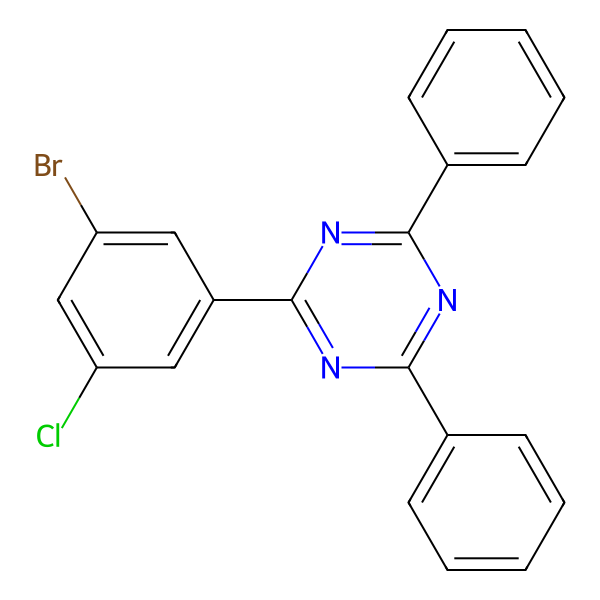
CAS: 1073062-42-6; 2-(3-Bromo-5-Chlorophenyl)-4,6-Diphenyl-1,3,5-Triazine
该化合物是一种卤化三子衍生物,其特点是其独特的分子结构,在苯环上含有溴和氯替代成分,该化合物主要用于有机合成和材料科学,因为它是建造复合芳烃系统的多用途中间体,其三联苯核心提供热和化学稳定性,而卤化联苯组则增强交叉相交反应和替代反应的再活性.二联苯替代体进一步有助于其设计先进材料,如发光或光电子化合物的效用.对于受控的功能化来说,该化合物在制药和聚合物研究中受到重视,因为它具有可预测的再活动性和结构模块性.
- 英文名称2-(3-Bromo-5-Chlorophenyl)-4,6-Diphenyl-1,3,5-Triazine
- 中文名称2-(3-溴-5-氯苯基)-4,6-二苯基-1,3,5三嗪
- IUPAC名称2-(3-bromo-5-chlorophenyl)-4,6-diphenyl-1,3,5-triazine
- 其它别名2-(3-Bromo-5-Chlorophenyl)-4,6-Diphenyl-1,3,5-Triazine; 1,3,5-Triazine, 2-(3-Bromo-5-Chlorophenyl)-4,6-Diphenyl-
- CAS编号1073062-42-6
- MFCD编号:MFCD28559269
- EINECS号:188-367-4
- 分子式:C21H13BrClN3
- 分子量:422.71
- 产品CID: 111688
- 产品分类有机原料 → 苯类化合物 → 苯取代衍生物
MSDS等安全信息

欧盟法规
C&L通报上下游产品
2-氯-4,6-二苯基-1,3,5-三嗪 2-Chloro-4,6-Diphenyl-1,3,5-Triazine 3842-55-5合成工艺路线路线简述
- 合成目标产物 2-(3-Bromo-5-Chlorophenyl)-4,6-Diphenyl-1,3,5-Triazine 主要起始原料 3-Bromo-5-Chloro-Benzaldehyde And Benzamidine Hydrochloride
- (文献来源)合成步骤主要原料 3-Bromo-5-Chloro-Benzaldehyde 和 Benzamidine Hydrochloride
1,3-二溴-5-氯苯置于lithium Chloro-Isopropyl-Magnesium Chloride体系中,用 四氢呋喃,甲苯 用作溶剂,化学反应 28.5H,反应生成2-(3-溴-5-氯苯基)-4,6-二苯基-1,3,5三嗪
参考文献:トリアリールトリアジン化合物の製造方法
标题:トリアリールトリアジン化合物の製造方法
摘要:这是一个合成有机电致发光器件中使用的电荷传输材料的中间体,对于三芳基三嗪化合物的简便且廉价的制备方法的问题.解决方法是通过将具有两种不同芳香基的2-苯基-4,6-二氯三嗪化合物与特定芳基格氏试剂反应来制备三芳基三嗪化合物.代表性化合物为:2-(3-溴-5-氯苯基)-4,6-二苯基-1,3,5-三嗪.[选择图]无
专利信息
专利号:US-2025042877-A1
优先权日:2021-11-30
标题:Organic compound, organic device, light-emitting apparatus, and electronic appliance
发明人:HAYASHI YUKI; KAWAKAMI SACHIKO; HASHIMOTO NAOAKI
权利人:SEMICONDUCTOR ENERGY LAB
摘要:A novel compound, a synthesis method thereof, and an organic device including the novel compound are provided. A compound represented by General Formula (G1) is provided. In General Formula (G1), each of R1, R2, and R5 to R7 independently represents any of hydrogen (including deuterium), an alkyl group having 1 to 10 carbon atoms, a substituted or unsubstituted aryl group having 1 to 60 carbon atoms, and a substituted or unsubstituted heteroaryl group having 1 to 60 carbon atoms. R3 represents a condensed ring composed of 4 to 10 rings containing nitrogen as an element forming the ring, and R4 represents any of a substituted or unsubstituted condensed ring having 1 to 60 carbon atoms, a substituted or unsubstituted aryl group with a molecular weight of 78 or more, and a substituted or unsubstituted heteroaryl group with a molecular weight of 80 or more. At least one of A1 to A3 represents nitrogen, and each of the others represents substituted carbon. Each of substituents of A1 to A3 independently represents any of hydrogen (including deuterium), an alkyl group having 1 to 10 carbon atoms, a substituted or unsubstituted aryl group having 1 to 60 carbon atoms, and a substituted or unsubstituted heteroaryl group having 1 to 60 carbon atoms.
网址: http://www.boyangpharm.com
企业联系电话:15870608400👤
地址:江西省南昌市安义县工业园区
企业联系电话:15870608400👤
📞江西博阳医药化工有限公司 ⚠️参考联系方式
联系人:龚总
电话:15870608400
手机:15870608400
传真:15870608400
邮箱:sales@boyangpharm.com,717293806@qq.com
通信地址: 江西省南昌市安义县工业园区
邮编: 330500
电话:15870608400
手机:15870608400
传真:15870608400
邮箱:sales@boyangpharm.com,717293806@qq.com
通信地址: 江西省南昌市安义县工业园区
邮编: 330500
🆔 联系时候可告知是从"百琢研"平台获取的信息.
⚠️ 声明: 该企业未认证、未认领,请自行辨别信息的真实性和可靠性。咨询或交易时请注意风险评估与信息核实,百琢研不参与任何交易。企业认领注册入口→
地址:江西省南昌市安义县工业园区
⚠️ 未注册 · 未认证企业
 备注: 📌 数据来源说明:本展台内容基于各搜索引擎等公开数据整理,仅作展示用途。请用户自行辨别
✉️ 若企业需抹除展台内容或有异议, 请通过页面底部联系方式告知我们,我们会尽快处理。
网址: http://www.bayi.com.cn
企业联系电话:010-69765588-8068👤
地址:北京市房山区燕山东流水路20号
企业联系电话:010-69765588-8068👤
📞北京八亿时空液晶科技股份有限公司 ⚠️参考联系方式
联系人:张经理
电话:010-69765588-8068
手机:18600516188
传真:010-69760560
邮箱:zhangshupo@aliyun.com
通信地址: 北京市房山区燕山东流水路20号
邮编: 102205
电话:010-69765588-8068
手机:18600516188
传真:010-69760560
邮箱:zhangshupo@aliyun.com
通信地址: 北京市房山区燕山东流水路20号
邮编: 102205
🆔 联系时候可告知是从"百琢研"平台获取的信息.
⚠️ 声明: 该企业未认证、未认领,请自行辨别信息的真实性和可靠性。咨询或交易时请注意风险评估与信息核实,百琢研不参与任何交易。企业认领注册入口→
地址:北京市房山区燕山东流水路20号
⚠️ 未注册 · 未认证企业
备注: 📌 数据来源说明:本展台内容基于各搜索引擎等公开数据整理,仅作展示用途。请用户自行辨别✉️ 若企业需抹除展台内容或有异议, 请通过页面底部联系方式告知我们,我们会尽快处理。
第 1 / 1 页