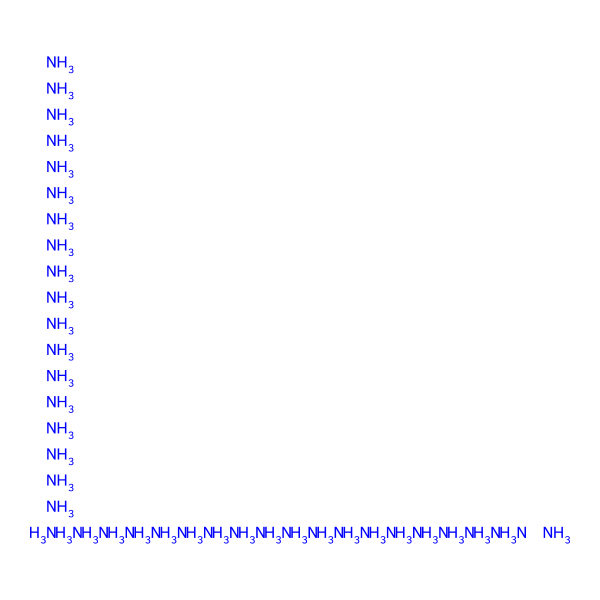
CAS: 9028-38-0; Ammonia 该化合物是一种酶,在氯酮体的新陈代谢中发挥着至关重要的作用,特别是在将乙酸乙酯转化为3-氢氧丁酸中,这种酶主要在肝脏中发现,并涉及能源生产监管,特别是在节食或低碳水化合物摄入期间,尤其是在发生发酵时,这种酶会刺激这两种化合物之间的可逆反应,利用NADH作为同源体. 3-HBDH对保持血液中氯酮体的平衡非常重要,在长时间的节食或碳水化合物限制期间,可以作为组织,特别是大脑的替代能源.酶的活动可能受到各种因素的影响,包括激素调控和子体的可用性.其研究在理解代谢紊乱症,例如糖尿病和与改变能源代谢相关的条件方面具有重要意义,3-HDHDH在血液中保持氯酮体的平衡非常重要.3-HDHDHDH可以作为组织组织,特别是大脑在长时间的节食或碳水化合物限制期间作为替代能源能源来源. 物理性质 沸点 806.8±65.0 °C at 760 mmHg闪点 441.7±34.3 °C密度 1.2±0.1 g/cm3LogP: 5.89折射率 1.663蒸汽压 0.0±2.9 mmHg at 25°C敏感性 Application Suitable for the determination of acetoacetate and D(-)-3-hydroxybutyrate by the method of Williamson, D. H., and Mellanby, J., Methods of Enzymatic Analysis, Bergmeyer, H., ed., 2nd edition, 4, 1836 (1974). Bi°Chem/physiol Actions In mammalian systems, β-hydroxybutyrate dehydrogenase is l°Calized on the inner mit°Chondrial membrane and requires phosphatidyl choline for activity. In contrast, the enzyme from Pseudomonas is a soluble cytosolic enzyme that does not require a phospholipid allosteric activator. The enzyme is required for the utilization of ketone bodies as a source of metabolic energy. It catalyzes the oxidation of 3-hydroxybutyrate to acetoacetate, the first step in the conversion of ketone bodies to citric acid, which is then further metabolized via the tricarboxylic acid cycle (Krebs cycle). Unit Definition One unit will oxidize 1.0 μmole of D-β-hydroxybutyrate to acetoacetate per min at pH 7.8 at 37 °C. Physical form Lyophilized powder containing sucrose and Tris buffer salts外观形态 白色至类白色冻干粉末储存条件 -20°C产品应用 该化合物用作合成氯酮(包括乙酸乙酸盐,D-3氢氧丁酸盐和乙酮),通过调节D-3--羟丁胺酸酯/乙酸酮比率,酶能确保将氯酮机体作为替代能源源有效运输到诸如脑和心肌等组织,同时帮助防止酸性硬性反应.
欧盟法规 C&L通报 REACH预注册 全部 工厂 研发
试剂 贸易 现货
供应商参考报价(招募中)
品牌试剂参考报价(招募中)
📌 第三方产品分析报告 ✅ COA系统入驻 | 共享模式