MSDS等安全信息
- GHS象形图


- GHS符号GHS08 & GHS07 & GHS09;
注释: Health hazard & Exclamation mark & Environment - 危险类别生殖毒性 类别1A
急性毒性 类别4(吸入)
急性毒性 类别4(经口)
特定目标器官毒性-重复接触 类别2
水生急性毒性 类别1
水生慢性毒性 类别1 - 警示词Danger(危险)
- 危险描述H360 |可能损害生育能力或胎儿.
H332 |吸入有害.
H302 |吞咽有害.
H373 |长期或反复接触可能损害器官.
H400 |对水生生物毒性极大.
H410 |对水生生物毒性极大并具有长期持续影响. - 防范说明P264-P270-P301+P312-P330-P501-P261-P271-P304+P340-P312-P273-P391-P501
- 危险等级6.1(b)
- UN编号3288
- 包装等级III
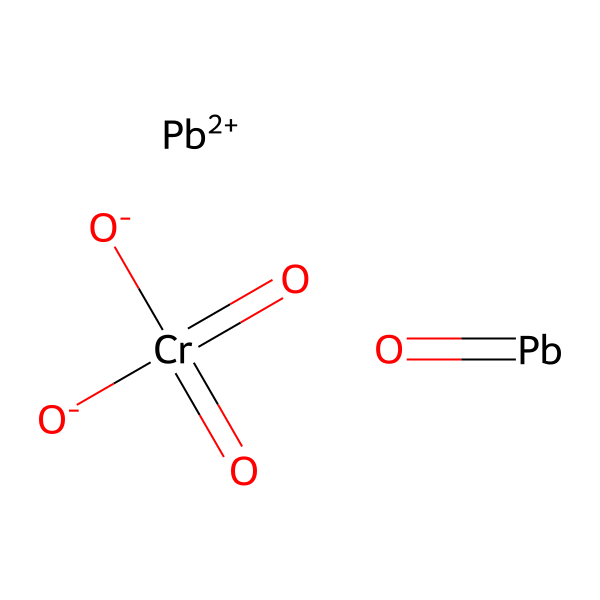
- 安全声明IDENTIFICATION AND USE: Lead chromate oxide is a red crystalline powder. It is used as a pigment. HUMAN EXPOSURE AND TOXICITY: Signs of exposure: Respiratory irritations; nasal septum irritations; leukocytosis, leukopenia, monocytosis, eosinophilia; eye injury, conjunctivitis; and skin ulcers, sensitization dermatitis. Target organs which are affected include blood, lung, respiratory system, liver, kidneys, eyes, and skin. ANIMAL STUDIES: There is no data. | Lead mimics other biologically important metals, such as zinc, calcium, and iron, competing as cofactors for many of their respective enzymatic reactions. For example, lead has been shown to competitively inhibit calcium's binding of calmodulin, interferring with neurotransmitter release. It exhibits similar competitive inhibition at the NMDA receptor and protein kinase C, which impairs brain microvascular formation and function, as well as alters the blood-brain barrier. Lead also affects the nervous system by impairing regulation of dopamine synthesis and blocking evoked release of acetylcholine. However, it's main mechanism of action occurs by inhibiting delta-aminolevulinic acid dehydratase, an enzyme vital in the biosynthesis of heme, which is a necesssary cofactor of hemoglobin. Hexavalent chromium's carcinogenic effects are caused by its metabolites, pentavalent and trivalent chromium. The DNA damage may be caused by hydroxyl radicals produced during reoxidation of pentavalent chromium by hydrogen peroxide molecules present in the cell. Trivalent chromium may also form complexes with peptides, proteins, and DNA, resulting in DNA-protein crosslinks, DNA strand breaks, DNA-DNA interstrand crosslinks, chromium-DNA adducts, chromosomal aberrations and alterations in cellular signaling pathways. It has been shown to induce carcinogenesis by overstimulating cellular regulatory pathways and increasing peroxide levels by activating certain mitogen-activated protein kinases. It can also cause transcriptional repression by cross-linking histone deacetylase 1-DNA methyltransferase 1 complexes to CYP1A1 promoter chromatin, inhibiting histone modification. Chromium may increase its own toxicity by modifying metal regulatory transcription factor 1, causing the inhibition of zinc-induced metallothionein transcription. (A12, L16, A34, A35, A36, T4, A20, A22, L136)
- 危险类别码Carcinogenicity in man cannot be assessed conclusively because of insufficient data (Group 3B); [MAK] See Lead chromate. See Lead and linked occupational diseases. See Chromium and linked occupational diseases.
欧盟法规
《欧盟PIC法规》ECHA物质OtherC&L通报REACH预注册供应商参考报价(招募中)
品牌试剂参考报价(招募中)
📌 第三方产品分析报告
✅ COA系统入驻 | 共享模式