CAS: 2217-06-3; Dipicryl Sulfide
- 英文名称Dipicryl Sulfide
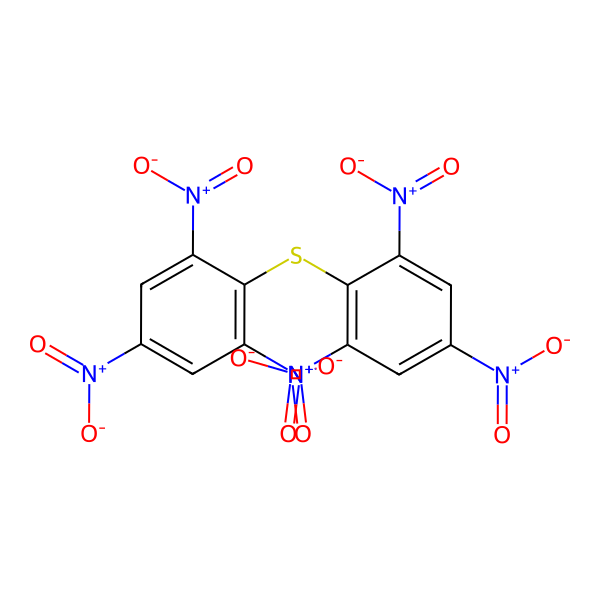
- 中文名称1,3,5-三硝基-2-(2,4,6-三硝基苯基)硫基苯
- IUPAC名称1,3,5-trinitro-2-(2,4,6-trinitrophenyl)sulfanylbenzene
- 其它别名Picrylsulfide (6CI,7CI,8CI); 2,2',4,4',6,6'-Hexanitrodiphenyl sulfide; 2,4,6,2',4',6'-Hexanitrodiphenyl sulfide; 2,4,6-Trinitrophenyl sulfide; Bis(2,4,6-trinitrophenyl) sulfide; Dipicryl sulfide
- CAS编号2217-06-3
- MFCD编号:MFCD00338491
- EINECS号:218-704-3
- FDA UNII编号:XL78QN6UV5
- 分子式:C12H4N6O12S分子量:456.26
- 产品CID: 2533434
- 产品分类有机原料 → 烃类化合物及其衍生物 → 烃类硝化物

物理性质
- 熔点226 °C(溶剂: ethyl acetate (141-78-6); ethanol (64-17-5))
- 沸点531.3±50.0 °C(预测)
- 闪点275.1 °C
- 密度1.8964 (粗估)
- PSA:300.22
- LogP:6.4262
- 折射率1.7000 (估算)
- 蒸汽压7.8E-11 mmHg at 25 °C
- 敏感性Organosulfides, such as DIPICRYL SULFIDE, are incompatible with acids, diazo and azo compounds, halocarbons, isocyanates, aldehydes, alkali metals, nitrides, hydrides, and other strong reducing agents. Reactions with these materials generate heat and in many cases hydrogen gas. Many of these compounds may liberate hydrogen sulfide upon decomposition or reaction with an acid. | DIPICRYL SULPHIDE, [DRY OR WETTED WITH < 10 % WATER] is a high explosive. Reacts with oxidizing agents in often vigorous reactions to liberate toxic gases. Reacts vigorously with reducing agents, including hydrides, sulfides and nitrides. These reactions may culminate in detonation. May explode in the presence of a strong base such as sodium hydroxide or potassium hydroxide even in the presence of water or organic solvents.
MSDS等安全信息
- 危险类别Excerpt from ERG Guide 113 [Flammable Materials (Wet / Desensitized Explosive)]: | Some are toxic and may be fatal if inhaled, ingested or absorbed through skin. Specifically, Dinitrophenol, wetted (UN1320); Dinitrophenolates, wetted (UN1321), Sodium dinitro-o-cresolate, wetted (UN1348); and Barium azide, wetted (UN1571) are known to be toxic. Contact may cause burns to skin and eyes. Fire may produce irritating, corrosive and/or toxic gases. Runoff from fire control or dilution water may cause environmental contamination. (ERG, 2024) | Excerpt from ERG Guide 112 [Explosives - Division 1.1, 1.2, 1.3 or 1.5]: | Fire may produce irritating, corrosive and/or toxic gases. (ERG, 2024) | · Some are toxic and may be fatal if inhaled, ingested or absorbed through skin. Specifically, Dinitrophenol, wetted (UN1320); Dinitrophenolates, wetted (UN1321), Sodium dinitro-o-cresolate, wetted (UN1348); and Barium azide, wetted (UN1571) are known to be toxic. | · Contact may cause burns to skin and eyes. | · Fire may produce irritating, corrosive and/or toxic gases. | · Runoff from fire control or dilution water may cause environmental contamination.
- 警示词Danger
- 危险描述H201: (Deleted) Explosive; mass explosion hazard [Danger Explosives]
- 防范说明P210, P230, P240, P250, P280, P370+P380, P372, P373, P401, and P501
- UN编号401.0
上下游产品
2,4,6-trinitr°Chlorobenzene 1,1-diphenylthiourea 1-picryl-pyridinium; chloride acetic acidbis(2,4,6-trinitrophenyl) sulfone 2,4,6-Trinitrophenol 2,4,6-tritrobenzenethiol 2,4,6-trinitro-phenetole合成工艺路线路线简述
- 合成目标产物 Bis(2,4,6-Trinitrophenyl) Sulphide 主要起始原料 2,4,6-Trinitrochlorobenzene
- (文献来源)合成步骤主要原料 2,4,6-Trinitrochlorobenzene
📜2,4,6-三硝基氯苯置于sodium Thiosulfate,Magnesium Carbonate体系中,用 乙醇 用作溶剂,化学反应 1.0H,以60%的收率获得1,3,5-三硝基-2-(2,4,6-三硝基苯基)硫基苯
参考文献:双(2,4-二硝基苯基)醚,双(2,4,6-三硝基苯基)醚和双(2,4,6-三硝基苯基)硫醚三种硝基芳香化合物的结构与能量性质的相关性
标题:双(2,4-二硝基苯基)醚,双(2,4,6-三硝基苯基)醚和双(2,4,6-三硝基苯基)硫醚三种硝基芳香化合物的结构与能量性质的相关性
摘要:在最初发现 Tnb 醚衍生物几十年后,该化合物类别的三个成员的第一个单晶 X 射线结构终于可以显示出来,并且可以完成分析数据.这组分子是一个有趣的例子,它说明了为什么旧的高能材料灵敏度值(如键解离焓和静电势)的预测模型有时会给出与实验确定的值显着不同的结果.通过应用诸如 Hirschfeld 表面分析和指纹图分析之类的利用高能材料晶体结构的新模型,可以了解实验发现的敏感性趋势,并且可以正确看待旧模型.
Doi:10.1021/jacs.9B11086
参考文献:双(2,4-二硝基苯基)醚,双(2,4,6-三硝基苯基)醚和双(2,4,6-三硝基苯基)硫醚三种硝基芳香化合物的结构与能量性质的相关性
标题:双(2,4-二硝基苯基)醚,双(2,4,6-三硝基苯基)醚和双(2,4,6-三硝基苯基)硫醚三种硝基芳香化合物的结构与能量性质的相关性
摘要:在最初发现 Tnb 醚衍生物几十年后,该化合物类别的三个成员的第一个单晶 X 射线结构终于可以显示出来,并且可以完成分析数据.这组分子是一个有趣的例子,它说明了为什么旧的高能材料灵敏度值(如键解离焓和静电势)的预测模型有时会给出与实验确定的值显着不同的结果.通过应用诸如 Hirschfeld 表面分析和指纹图分析之类的利用高能材料晶体结构的新模型,可以了解实验发现的敏感性趋势,并且可以正确看待旧模型.
Doi:10.1021/jacs.9B11086
海关参考信息
- 2930909099-其他有机硫化合物
- 💡 提示:海关信息按照顺序优先匹配,如需确认的海关信息,请参考相关资料。
- 详情请参考:📖 海关编码查询和海关进出口税则
供应商参考报价(招募中)
品牌试剂参考报价(招募中)
📌 第三方产品分析报告
合成参考文献
摘要:2024 Emergency Response Guidebook, https://www.phmsa.dot.gov/training/hazmat/erg/emergency-response-guidebook-erg



📝 需求与反馈
尽可能描述清楚需求与问题信息