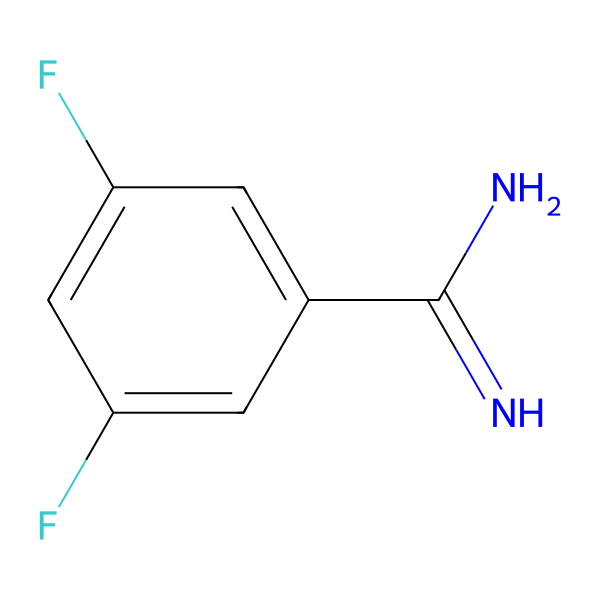
CAS: 582307-06-0; 3,5-Difluorobenzimidamide
该化合物是一种含氟芳烃的碳本酰胺衍生物,其特点是在苯环的3和5个位置有两种氟化碳本酰胺替代物,这一结构特征增强了其电子特性和反应性,使其成为有机合成中的宝贵中间体,特别是在制药和农用化学的制作方面; 碳本酰胺组的存在使得能够进一步实现功能化,从而能够建造异环化合物或与金属中心进行协调; 其稳定性和明确界定的再活性特征使其适合用于医学化学研究,需要精确的分子修改; 该化合物一般在受控制的条件下处理,因为它对湿度和强酸或碱十分敏感.
- 英文名称3,5-Difluorobenzimidamide
- 中文名称3,5-二氟苯甲酰亚胺
- IUPAC名称3,5-Difluorobenzimidamide
- 其它别名3,5-二氟苯甲脒; 3,5-Difluoro-Benzenecarboximidamide
- CAS编号582307-06-0
- MFCD编号:MFCD05663024
- 分子式:C7H6F2N2分子量:156.13
- 产品CID: 1557170
- 产品分类有机原料→分子砌块→芳环类化合物→苯类化合物
MSDS等安全信息
上下游产品
(3,5-difluorophenyl)diazirine sodium thiophenolate合成工艺路线路线简述
📜(3,5-Difluorophenyl)Diazirine,Sodium Thiophenolate 以 甲醇 作为反应溶剂,化学反应生成 3,5-二氟苯甲腈,3,5-二氟苯甲脒,二苯二硫醚
参考文献:Reaction Of Arylhalodiazirines With Thiophenoxide: A Redox Process
标题:Reaction Of Arylhalodiazirines With Thiophenoxide: A Redox Process
摘要:Phenylbromodiazirine Reacts With Thiophenoxide Ion In Methanol To Give Benzonitrile,Benzamidine,Ammonia,And Diphenyl Disulfide. The Reaction Is General For Arylhalodiazirines,With Electron-Withdrawing Groups On The Aromatic Ring Exerting A Small Rate-Enhancing Effect. Three Potential Mechanisms Are Suggested For This Redox Process. These Mechanisms Include An N-Sulfenylated Diazirine,A Diazirinyl Radical,And A Diazirinyl Anion. Ring Opening Of These Intermediates And Subsequent Transformations Would Lead To Benzonitriles,Benzamidine,And Ammonia. A Key Intermediate In These Transformations Is Phsnh2,32. This Intermediate Has Been Independently Generated And Found To Rapidly Convert To Ammonia And Diphenyl Disulfide Under The Reaction Conditions. Another Proposed Intermediate,N-(Phenylthio)Benzamidine,38,Has Also Been Independently Generated And Subjected To The Reaction Conditions,Where Benzamidine And More Diphenyl Disulfide Result. Theoretical Calculations Suggest The Existence Of Isomeric Diazirinyl Anions. In Addition To A Diazirinyl Ion With Charge Essentially On Carbon,There Is Also An Allylic-Type Ion With Charge On The Two Nitrogen Atoms. Single-Electron Reduction Of A Diazirinyl Radical Necessarily Leads To A Nitrogen-Centered Diazirinyl Anion. Conversion Of This Anion To The Carbon-Centered Diazirinyl Anion Is A Forbidden Process. These Theoretical Studies Suggest That The Diazirinyl Anion May Be A Viable Intermediate In Solution.
DOI:10.1021/ja00070A003
海关参考信息
- 2902300000-甲苯
- 💡 提示:海关信息按照顺序优先匹配,如需确认的海关信息,请参考相关资料。
- 详情请参考:📖 海关编码查询和海关进出口税则
供应商参考报价(招募中)
品牌试剂参考报价(招募中)
📌 第三方产品分析报告
合成参考文献
参考DOI号:10.1021/ja00070a003


📝 需求与反馈
尽可能描述清楚需求与问题信息