相似化合物
929-10-2 2519-37-1 68526-85-2物理性质
- 熔点-117.1 °C
- 沸点170.96 °C at 760 mmHg
- 闪点71.1 °C
- 密度0.832
- PSA:20.23
- LogP:2.1951
- 折射率1.4046 (估算)
- 蒸汽压0.207 mmHg at 25 °C
- 溶解性Insoluble (NIOSH, 2024) | Soluble in ethanol, ether | In water, 640 mg/L at 25 °C | Insoluble
- 敏感性ISOOCTYL ALCOHOL attacks plastics. REF [Handling Chemicals Safely, 1980. p. 236]. Acetyl bromide reacts violently with alcohols or water, [Merck 11th ed., 1989]. Mixtures of alcohols with concentrated sulfuric acid and strong hydrogen peroxide can cause explosions. Example: An explosion will occur if dimethylbenzylcarbinol is added to 90% hydrogen peroxide then acidified with concentrated sulfuric acid. Mixtures of ethyl alcohol with concentrated hydrogen peroxide form powerful explosives. Mixtures of hydrogen peroxide and 1-phenyl-2-methyl propyl alcohol tend to explode if acidified with 70% sulfuric acid, [Chem. Eng. News 45(43):73(1967); J, Org. Chem. 28:1893(1963)]. Alkyl hypochlorites are violently explosive. They are readily obtained by reacting hypochlorous acid and alcohols either in aqueous solution or mixed aqueous-carbon tetrachloride solutions. Chlorine plus alcohols would similarly yield alkyl hypochlorites. They decompose in the cold and explode on exposure to sunlight or heat. Tertiary hypochlorites are less unstable than secondary or primary hypochlorites, [NFPA 491 M, 1991]. Base-catalysed reactions of isocyanates with alcohols should be carried out in inert solvents. Such reactions in the absence of solvents often occur with explosive violence, [Wischmeyer(1969)].
- 外观形态液体;由结构相近的支链伯醇异构体组成的混合物
- 储存条件Store at room temperature
- 产品应用该化合物用于陶瓷,纸张涂料,纺织品和乳胶橡胶;
欧盟法规
ECHA物质ECHA物质C&L通报REACH预注册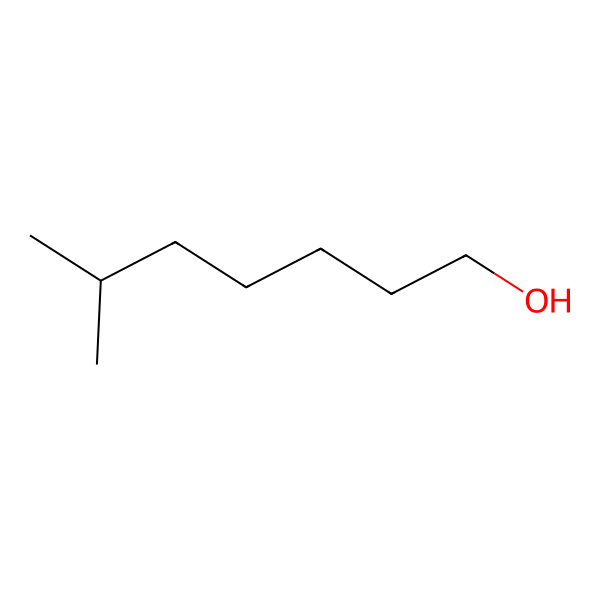
 ;
;